Trucking Company
Local Freight Transport - Wellington
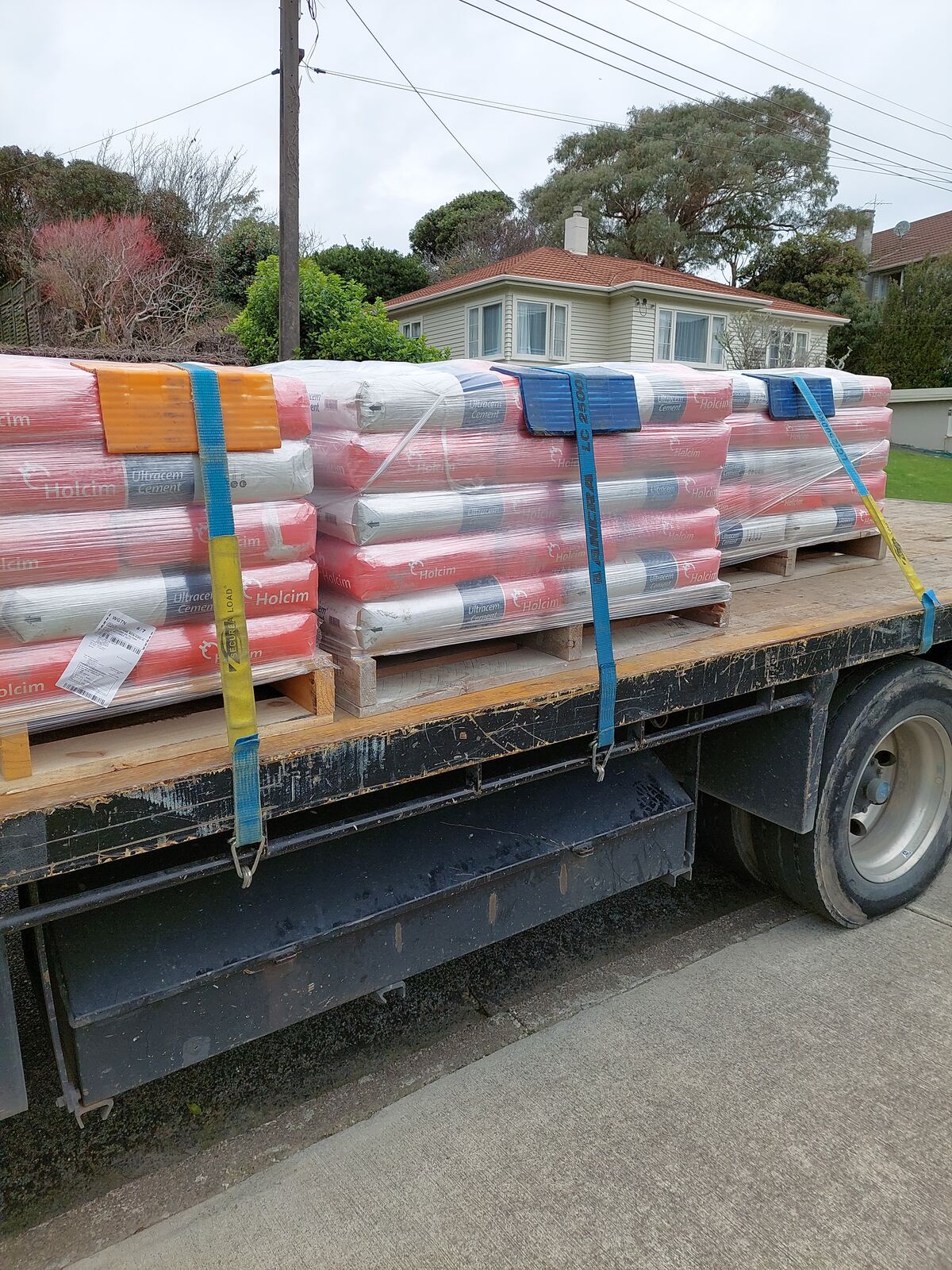
Wellington freight runs with crane-assisted loading and unloading. No dock required - CDT places freight where it needs to go.
Wellington freight runs with crane-assisted loading and unloading. No dock required - CDT places freight where it needs to go.
Getting heavy or awkwardly shaped cargo from A to B across Wellington? It's rarely as simple as booking a truck. Some jobs flat-out defeat conventional vehicles before they've even left the depot. HIAB crane delivery - essentially a truck with a hydraulic crane bolted right onto its chassis - supports construction sites, art installations, demolition projects, and time-sensitive freight across the wider region. We're talking about the kinds of spots Wellington is notorious for: streets that barely qualify as two-lane, driveways you'd hesitate to walk a wheelbarrow down, and terrain that seems designed to frustrate logistics planners. Drawing on decades of stage rigging and construction expertise, CDT Transport tackles cargo most people would write off as unmovable, operating as a trucking company serving the Wellington area. Coverage spans Wellington, Lower Hutt, Upper Hutt, and Porirua - with scheduling built around your project, not ours.
Anyone who's attempted to thread a full-sized truck up a Mount Victoria street - or shoehorn one into a Te Aro laneway barely wider than a garden path - understands the problem immediately. Wellington simply wasn't laid out with heavy freight in mind. Roads corkscrew uphill, pinch between Victorian-era buildings, and occasionally just... stop.
HIAB cranes sit mounted on smaller truck bodies. Delivery and lifting happen in a single visit - no waiting around for a separate crane to rock up hours later. Here's why that distinction genuinely matters across Wellington:
The range of work that demands this kind of service is surprisingly broad. Builders in Newtown need structural steel swung up to second-storey renovations. Artists position monumental works in public spaces where millimetres matter. Demolition crews wrestle tonnes of rubble out through gaps that barely accommodate a person walking sideways.
Good to know: Alan handles both the driving and the crane work personally. On time-sensitive projects, this eliminates the cascading delays that pile up when multiple teams need to arrive, set up, and coordinate with each other.
Then there's Wellington's wind - and anyone who lives here knows it deserves its own paragraph. Experienced operators understand precisely how loads behave when a southerly gust slams into a suspended panel at an exposed hillside site. That knowledge isn't theoretical. It's hard-won.
| Job Type | What's Involved | Why Tight Access Matters |
|---|---|---|
| Construction | Steel beams, pre-cast panels, timber frames | Sites are frequently wedged between existing buildings |
| Demolition | Heavy concrete, metal structures | Debris must exit through narrow urban properties |
| Sculpture/Art | Works weighing several tonnes, needing millimetre placement | Public spaces have exacting positioning requirements |
| Events/Stage | Rigging, heavy structures | Precise placement around people and infrastructure |
When you're a commercial client in Porirua staring down a deadline that's already slipping, a delayed delivery doesn't just inconvenience you - it can halt your entire workflow. That's precisely where experience earns its keep.
Decades in stage rigging forge a particular kind of discipline: heavy lighting rigs and speaker arrays suspended directly above performers' heads, night after night, zero tolerance for error. That same meticulous approach carries straight across to construction sites where workers move beneath active lifts. Here's what that experience brings:
If you live up in Karori or Kelburn, you already know: your driveway wasn't engineered for anything much bigger than a family car. Street parking is a daily battle, access lanes are barely a vehicle wide, and shared driveways are practically a defining feature of Wellington's older suburbs.
Here's something people don't always realise: the operator can deploy stabiliser legs right on the roadside and swing cargo clean over fences or even buildings to reach its destination. It's remarkably clever engineering put to practical use.
Larger freight companies routinely decline jobs where site access falls below their equipment minimums. That creates a genuine gap - one filled by operators who truly know Wellington's challenging urban geography: the narrow shared driveways snaking through Northland, the steep zigzag paths climbing Wadestown, the single-lane streets of Island Bay where two cars meeting head-on becomes a negotiation.
Wellington punches dramatically above its weight in arts and culture - and the logistics that support it need to match. Galleries and councils commission public sculptures on a regular basis. Events require heavy structures placed with surgical precision. What distinguishes art freight from ordinary cargo is care and exactness: public art installations demand specific orientation and height, stage rigging must align perfectly with technical plans every single time, and valuable works deserve treatment as irreplaceable pieces - not just another pallet of building supplies.
CDT's stage background means every lift accounts not only for tonnage but also for how the cargo looks and sits once it reaches its final position. That attentiveness to detail is precisely what separates a competent job from one the client genuinely remembers.
CDT operates right across the Wellington region - Lower Hutt, Upper Hutt, Porirua, Kāpiti Coast (Paraparaumu), and Wairarapa all fall within the service area. Coverage extends to tight access jobs in both urban centres and rural properties where terrain severely restricts your freight options. Travel times across the region mean same-day bookings remain feasible for urgent construction or demolition projects.
Construction materials, demolition debris, sculptures, machinery, building supplies - and honestly, just about any heavy item that needs lifting into position at a restricted-access site. That includes steel beams for renovations, concrete sections from demolition work, and art installations weighing multiple tonnes, plus timber frames, pre-cast panels, HVAC units, and landscaping features such as large boulders or retaining wall blocks.
HIAB trucks combine transport and lifting into one operation - the crane mounts ahead of the cab, so Alan delivers and positions cargo without any need for separate lifting equipment. Regular freight trucks drop loads at ground level and leave you to figure out the rest. HIAB units place cargo precisely where you need it, even swinging it over obstacles like fences, walls, or hedgerows.
Absolutely. Compact HIAB trucks navigate steep driveways and hillside sections that larger freight vehicles simply cannot attempt - particularly in older suburbs with narrow, winding access. Operators always assess driveway angles before committing to a route, so there are no unpleasant surprises halfway up.
Flexible scheduling accommodates time-critical bookings across Wellington, Lower Hutt, Porirua, and surrounding areas when project deadlines demand immediate freight delivery. Same-day availability depends on current bookings and travel distance, so reaching out early always strengthens your chances.
Seek out operators with stage rigging or construction backgrounds. They understand weight distribution intuitively, handle tight manoeuvring confidently, and achieve precise placement in confined spaces. Stage work instils accuracy because equipment hangs directly above people - there's literally zero margin for mistakes.
Yes. CDT works with contractors, builders, artists, property owners, and businesses that need heavy lifting in difficult-access locations. Commercial clients include construction firms and event companies; residential work covers renovations, landscaping projects, and sculpture installation. The approach stays consistent every time: assess the access, plan the lift, position the cargo safely.
If you have a regular freight run in Wellington and want to discuss ongoing arrangements, or a one-off job that needs the crane advantage, call Alan on 027 444 2191.